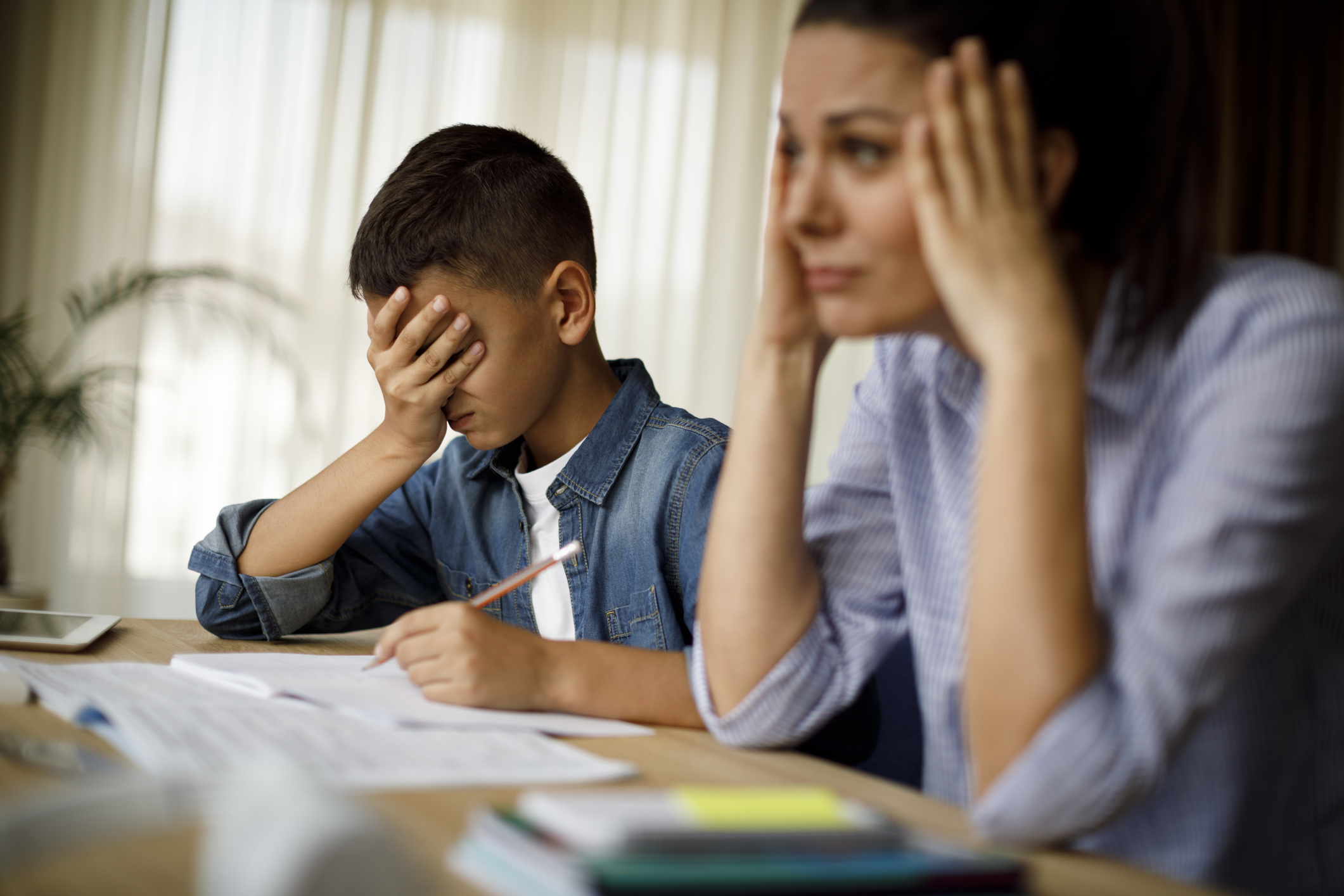
I resolved to be a scream-free mom, and so far I’ve gone 88 days without screaming at my children. Yes—I’m keeping track. If you’re wondering how to stop yelling at your kids, I can tell you what’s worked for me after much trial, much error, and much, much screaming.
First, let me tell you that I have a child who, I’m convinced, finds joy in challenging me. This child prods, groans, and throws in plenty of disrespectful zingers for good measure. I also want to come clean on the fact that while I haven’t screamed at my children for a few months, I have used words laced with grouchiness and sarcasm. But one thing at a time.
If you’re wondering how to stop yelling at your kids, too, here are 5 ways to start.
1. Recognize what screaming at your kids teaches.
A scream’s high volume is not its true danger. It’s OK to yell “I love you, sweetheart!” at the top of your lungs. But most of the time, when we scream at our children, it’s because we are angry, frustrated, or feeling some other intense emotion. Screaming models that it’s OK to lose control when angry, the exact opposite of what we want to teach our children.
Do this: The next time you feel a scream coming, pause and ask yourself one question: What do I actually want to teach right now? It sounds simple, but in the heat of the moment, that single question can stop you cold.
2. Admit that screaming doesn’t work.
When children are flooded with the anxiety or fear that comes from being screamed at, their brains have a much harder time processing what you’re saying. A study published in the journal Child Development found that children who are yelled at don’t change their behavior. “Shouting cannot reduce or correct their problem behavior,” said Ming-Te Wang, a co-author of the study. “On the contrary, it makes it worse.”
Do this: Try dropping your voice instead of raising it. A calm, low voice is actually harder to ignore than a loud one, and it keeps you from crossing into scream territory.
3. Remember your role.
This is one of the big-picture things to remember when you’re learning how to stop yelling at your kids. When things get heated between you and your child, you might feel like matching his yelling and temper tantrum with your own. Try not to. I’ll never forget when my 11-year-old daughter was giving me the silent treatment. I turned to my uncle, who happens to be a child psychologist, and offered my own response to her silence: “So I should just give her the silent treatment too, right?”
“No,” my uncle said calmly, “You’re the grown-up.” In other words, we need to be the voice of calm, reason, and maturity.
Do this: Find a phrase to say to yourself before you respond to your child. Mine is basically my uncle’s voice saying, “You’re the grown-up.” Yours might be something different. Maybe it’s “I set the temperature in this house” or “I can model staying calm.” Your phrase is your reset button. Use it.
4. End it before you get angry.
When we go back and forth with our kids, letting them pull us into an argument, we are allowing the situation to escalate. Once we’ve told our children what we expect from them, and we’ve let them voice any questions or concerns they have about it, we need to be clear with them that the discussion time is over. If we keep dialoguing, we run the risk of losing our temper.
Do this: Give your kids a clear signal that the conversation is closing and then actually close it. Try something like: “We’ve talked about this. I’ve heard your thoughts. This is where I landed.” Then stop engaging. No more back-and-forth, no more justifying, no more explaining. It’s a strategy that works for many moms.
5. Have a “scream” escape plan.
Just the other night, I felt like screaming at my children. I was tired. They were driving me crazy. I could’ve taken a deep breath and shared my expectations with them once again, but I didn’t have it in me. “I’m going for a walk,” I said. “Dad’s upstairs if you need him.”
And with that, I escaped long enough to cool down. If you don’t have the luxury of going for a walk, at least go to a separate room, put on some headphones, or go to the bathroom. Leave before you lose it.
Do this: Make your escape plan before you need it. Decide where you’ll go (a walk, your bedroom, the backyard), what you’ll say to your kids (“I need a minute” is completely enough), and how long you’ll give yourself to reset.
How do you keep yourself from screaming at your kids?