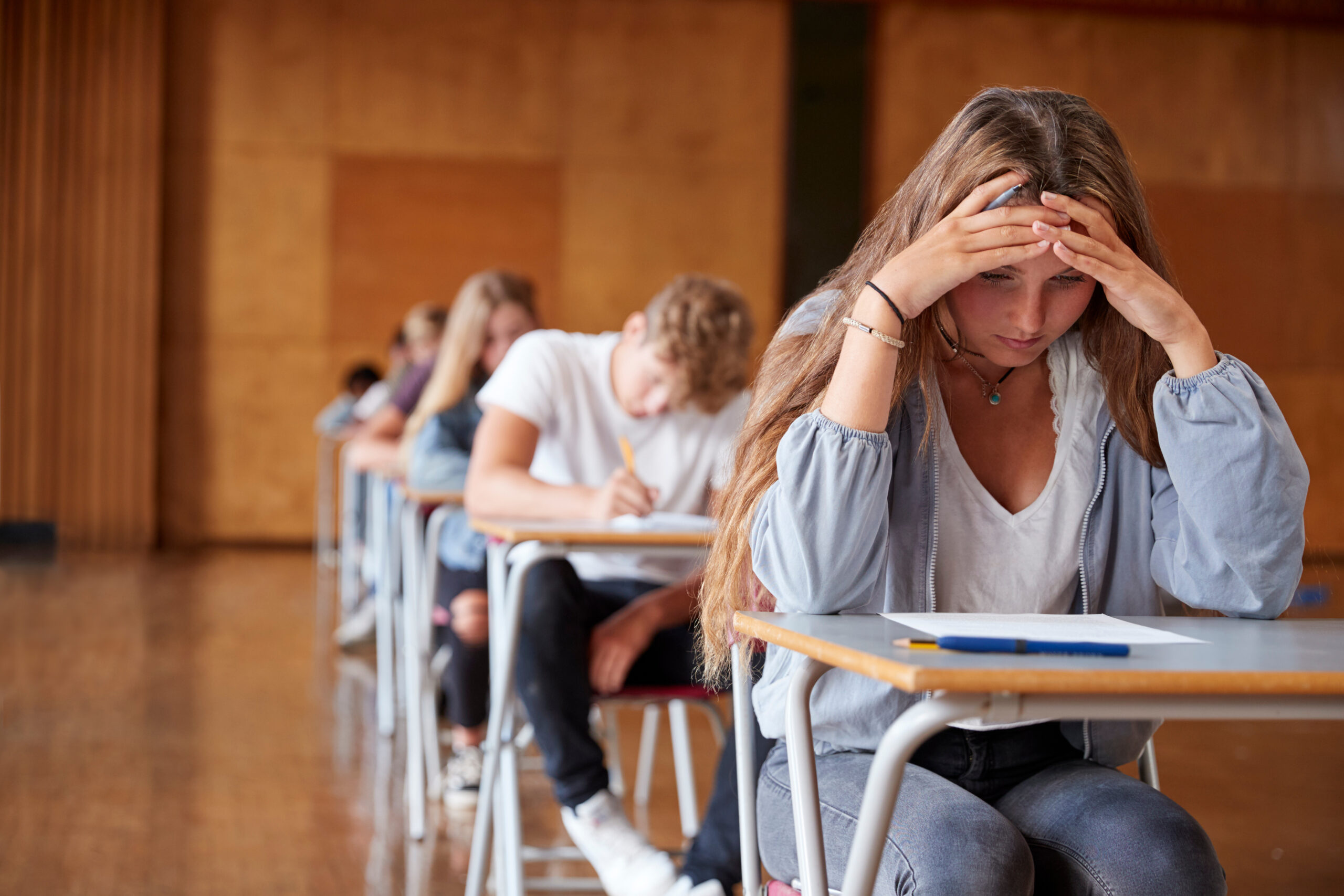
In early elementary school, I never knew what version of my kid would get off the bus. Some days, she’d step down on the sidewalk all smiles, toss me her backpack, and race home with her best friend who lived across the street. Other days, she’d snarl and huff and puff her way home, where she’d dissolve into a meltdown the moment the front door clicked shut.
Eventually, I found out about “after-school restraint collapse.” Psychologists use this term to describe what happens when young kids spend the day following rules, navigating social situations, and keeping big feelings in check. It all spills out when they finally get home—their safe place. If after-school meltdowns are becoming a familiar (and frustrating) part of your routine, here’s how to help your child unwind after school in ways that invite calm and connection.
1. Know the signs of his impending meltdown.
“Stay weather aware.” That’s what meteorologists in my area say during tornado season. While it doesn’t guarantee storms will blow through, it does mean to stay alert and ready. The same goes for after-school meltdowns. Our kids’ emotional storms rarely appear out of nowhere.
Your child might not say, “I had a hard day,” but his behavior will tell you. Is he quieter than usual in the car? Is he snapping at his sibling or bus stop bestie? Hunger, silence, irritability (hello stink eye), or even hyperactivity can all indicate your child is nearing emotional overload. Spotting the early signs helps you respond with empathy instead of being blindsided by the emotional monsoon.
2. Start with downtime (not a to-do list).
Research published in Psychoneuroendocrinology found that most young children experience significantly increased cortisol, the body’s primary stress hormone, during the early weeks of school. Some even show elevated levels for months. So it’s no wonder those after-school meltdowns spike during that time.
Instead of jumping into “How was your day?” or “Start your homework,” give your child 15–20 minutes to decompress. Offer a protein-rich snack like a cheese stick, apple slices with seed butter, or a handful of trail mix. And let her play, run around outside, or quietly reset with a low-stimulation activity like building with LEGO or coloring. A soft landing gives her body and brain time to recalibrate before jumping into whatever’s next.
3. Stay calm and present.
When your child experiences after school restraint collapse, she needs you to be the lighthouse, not the lifeguard. So, don’t dive headfirst into the waves of her emotions. Instead, stay steady and present, calmly guiding her through it.
Try short, soothing phrases like “I’m here,” “Take a deep breath,” or “Looks like today was tough.” Skip the lectures—just offer your calm presence. Sit nearby, rub her back, or stay in the same room without saying much. Sometimes what she needs most is to know she’s not alone in her overwhelm.
4. Avoid the meltdown traps.
Wouldn’t it be nice if our kids’ meltdowns happened when we were well-rested, caffeinated, and emotionally prepared? Instead, after school restraint collapse usually hits right when we’re tired, too. That’s often when we’re most tempted to lecture or blurt out a classic momism, like “I’ll give you something to cry about.” (No judgment. We’ve all said our fair share of these.)
But in those heated moments, our kids need our maturity more than our words. Skip the long explanations, harsh punishments, or anything that might come off as mocking, sarcastic, or shaming. Those reactions shut kids down instead of helping them learn to handle their emotions.
5. Reconnect afterward.
Once the meltdown passes and calm returns, that’s your window for gentle teaching. Keep it age-appropriate and straightforward: “You were really upset. Next time, let’s try taking deep breaths and saying, ‘I need to get myself together.’”
Point out what went well, too. Maybe he calmed down more quickly or used his words to ask for space. Then move on. Get back to dinner, playtime, or whatever’s next. That return to normal reminds your child that big feelings don’t change your love or shake the safety of home.
How do you handle after school restraint collapse?