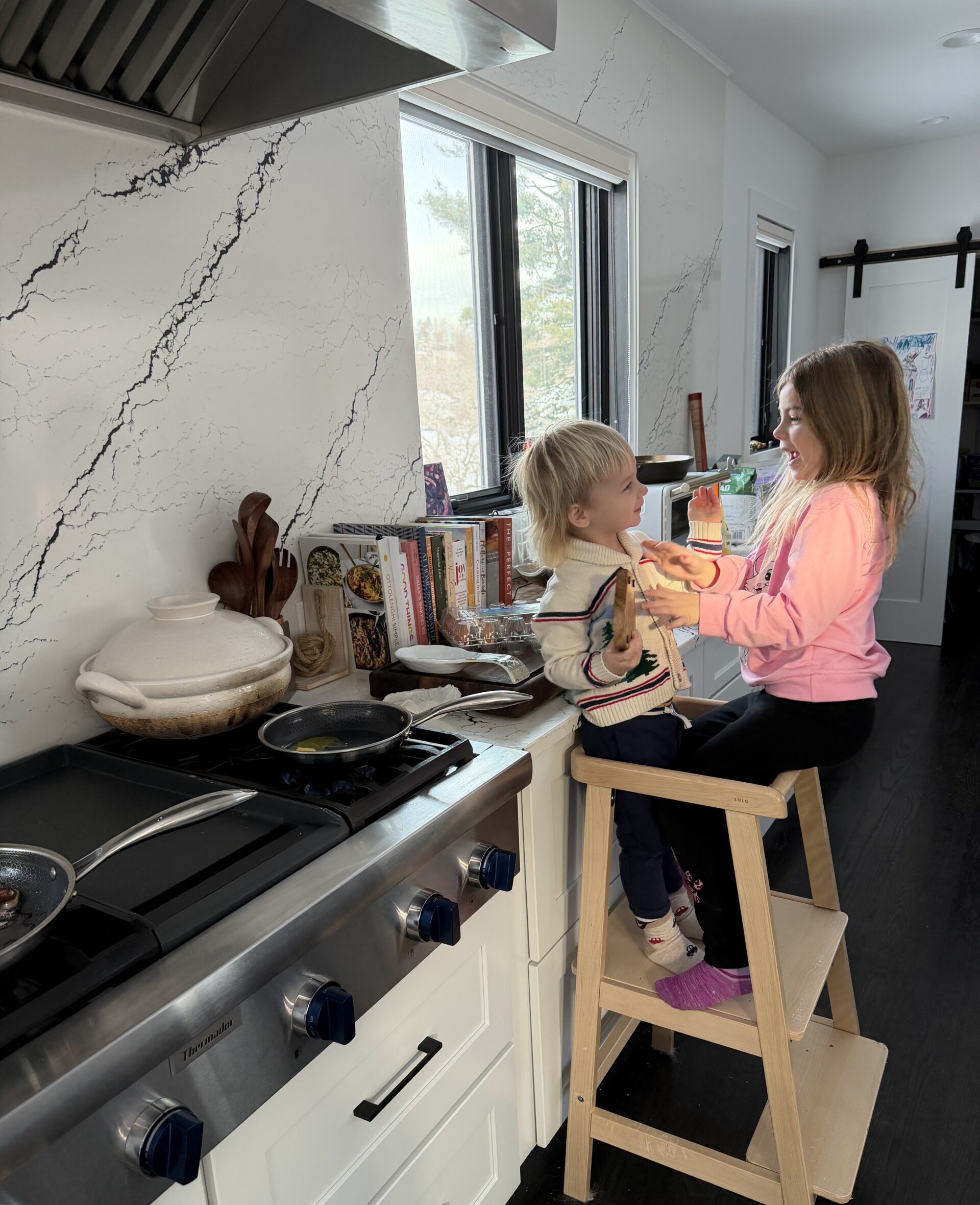
After prepping my older son for his civics test, my younger one asked for help finding his baseball glove. I got on my hands and knees and twisted to look under the couch. My older one shouted from the kitchen, “Mom, where’s the peanut butter?” right as the dog’s nose met mine, and he looked at me with his I-have-to-go-potty eyes. I yelled to anyone within earshot, “There’s another parent in the room!”
Are you the default parent in your home? Default parents are the ones the kids naturally go to for everything—permission, help, and guidance. Most moms are the default parent. It’s a badge we wear proudly, but it’s also a heavy load to carry. Here’s how to get the kids to turn to Dad more often or get Dad to see the need and jump in.
Consider why you’re the default parent.
Default parenting often arises due to societal expectations and traditional gender roles. If you and your husband are both listed as a contact for school, chances are, the school nurse is calling you, not him. To break some of these habits and lighten your load, divide up kid-related responsibilities. (Make it official on paper when possible.) You take teacher correspondences, and he does all doctor visits. You’re on birthday party duty, and he’s the go-to for extra-curriculars.
You also might be the default parent because you’re more empathetic, and the kids know they’ll get what they need emotionally from you. It feels good to be needed. Motherhood is amazing, and it’s a privilege to be there for your family. But when everything piles on, you still feel overwhelmed. That’s understandable, but a conversation must be had (with yourself, your husband, and your kids) about what you are capable of.
And be vocal but kind about what you want to change.
According to a Pew Research survey, mothers tend to say they do more than their spouse or partner, while fathers tend to say they share responsibilities about equally. The point is, your husband might not realize you feel like you’re carrying the load. Try saying things like, “I feel like the kids automatically come to me for things, and it’s a lot to juggle. I’d love it if you could step in.” Once your husband “gets it,” he can help you explain it to your kids.
To do that, borrow this idea from author and businesswoman Emily Ley. In this video, she shares how her husband used their large round coffee table to illustrate how Mom was doing a lot on her own. He had their kids try to lift the coffee table, and as each child joined in, the table became easier to hold. When Mom and Dad helped, the kids could lift the table above their heads. His point was, the family load is the family load. It’s not all for Mom to do, and everyone needs to hear that.
Set boundaries with your husband and kids.
Habits are hard to break, so changing family dynamic isn’t a quick move, but it’s possible with the right boundaries. If your husband is in charge of lunches and your kids ask, “Mom, can we have turkey instead of ham on our sandwiches tomorrow?” maintain the boundary that’s been set. Don’t get up and check to see if there’s turkey. Tell them to consult the lunch guy. Putting the words “talk to your father” in heavy rotation around your house communicates to your kids that Dad is capable and available.
But be sure to step back and give your husband room.
“The boys and I had a great evening!” my husband said when I got home from a Tuesday Bunco night with my women’s group. He reported that the kids got along, they stuck to the menu (tacos, of course, because… Tuesday), and he got lunches packed and a permission slip signed. Sometimes our husbands don’t step in because we don’t give them room. But by sharing responsibilities and fostering a more equitable dynamic, you can create a stronger bond between everyone and erase “default parent” from your forehead.
To involve your husband more, start by communicating your needs and desires. (Hopefully you’ve picked up on that recurring theme. It’s important!) Be open and honest about your needs, concerns, and the benefits of shared parenting. And this might be the hardest but more important step—practice trust by letting go of control. Allow your husband to take on tasks in his own way. He’s more likely to enjoy parenting if he can do it in the way that comes naturally, and you’ll reap the benefits of him taking the reins.
What does being the default parent feel like to you? Do you enjoy it, or do you wish your kids would go to your husband more often?