It can be scary to think you might have a child or teenager with anxiety. But, as quoted in the National Institutes of Health News in Health newsletter, Dr. Daniel Pine says, “Anxiety disorders are one of the most treatable mental health problems we see. Still, for reasons we don’t fully understand, most people who have these problems don’t get the treatments that could really help them.” But for those who do seek treatment, they can improve pretty quickly. So, it’s important to be aware of the signs of a childhood anxiety disorder.
“Most patients who suffer from anxiety are able to reduce or eliminate symptoms after several (or fewer) months of psychotherapy, and many patients notice improvement after just a few sessions,” says the American Psychological Association. You may already suspect anxiety as a cause of some of your child’s behaviors. But do you know what to look out for? Here are 7 signs of a childhood anxiety disorder.
1. She worries a lot.
If your child worries a lot, it could be a sign of a childhood anxiety disorder. My child’s worries tend to pop up at bedtime when the schoolwork is put away and the lights are off. They’re easy to spot because often, they start with the phrase “what if.” Usually, the worries revolve around a common theme.
Here are some examples: What if I fail this test? What if she doesn’t invite me to the party? What if I forget what to say when it’s my turn? What if I can’t find my friend at lunch? What if I don’t get into a good college? What if I never find a boyfriend/girlfriend or get married? The thing in common with all these questions is that they’re about the future, and your teen has no control over the outcome in the moment. The lack of control can be a worry in itself.
A child or teenager with anxiety has worries, or fears, that are disproportionate to what they’re going through, says Grace Berman, LCSW. The worries are excessive and don’t improve over time. Unlike common daily worries that come and go, anxiety sticks around, says Berman. “Some kids get anxious only in response to specific things, while others worry a lot in general.” Listen closely to what your child says. If she frequently worries about things in the future, it could be a sign of an anxiety disorder.
2. He avoids certain situations or stops participating in things he used to enjoy.
“I’m coming home,” reads the text. You know your child or teen has his club meeting after school, but it’s the third week in a row he’s skipped it. Or maybe your kid used to hang out with friends at the sandwich shop on Fridays, but he hasn’t gone in a while. If you’ve noticed your kid hasn’t gone to an activity he usually likes, he could be struggling. Losing interest or avoiding activities could be another of the signs of a childhood anxiety disorder.
He might feel judged on the sports team or at parties, so he stops going. Your kid may also ask to stay home from school. And if your family likes to play games or has frequent family dinners, he may no longer want to participate. He may come up with an excuse to get out of it like, I’m too tired or I have too much homework. It’d probably be a good idea to follow up with him and ask questions.
3. She has trouble concentrating on activities.
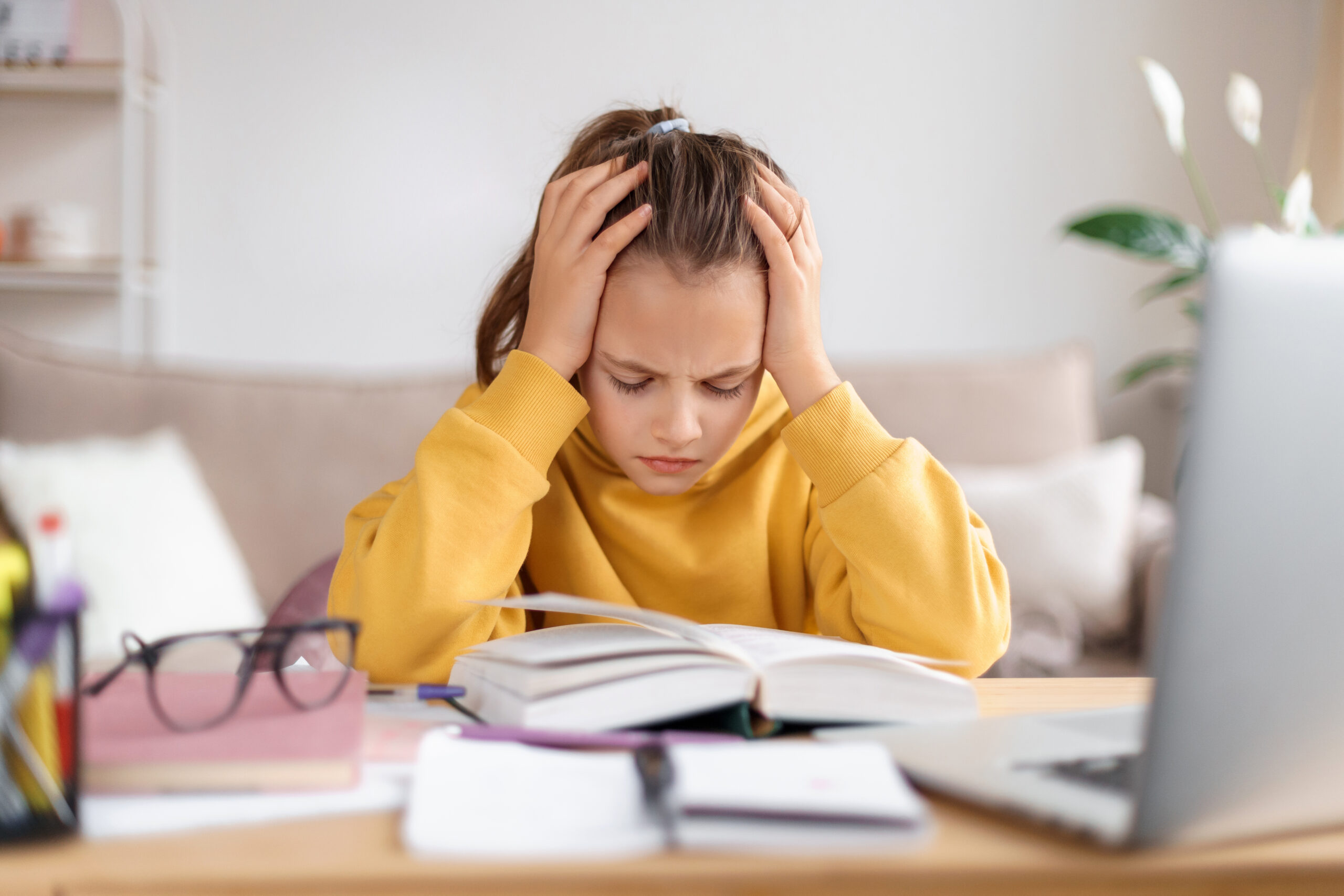
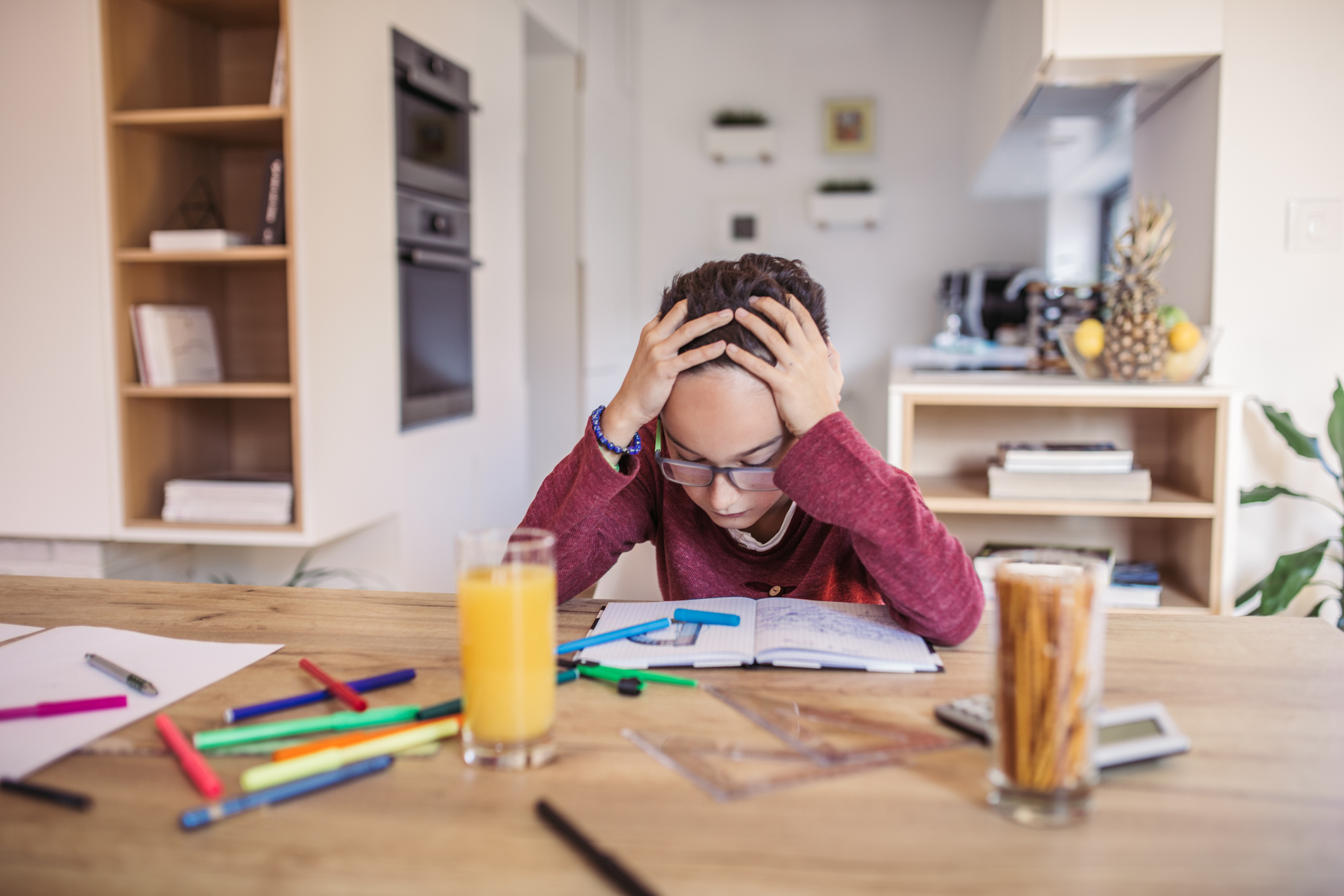
A sign of child or teenage anxiety you may have missed is that your kid has trouble concentrating on things that require brain power and attention. Berman says, “Anxious thoughts can distract kids from schoolwork and other tasks.” Evidence of it may be a dip in grades, or seeing your child in front of her laptop or books for hours, without evidence she’s gotten much done.
Find out what she’s up to. Is she playing games on her computer instead of doing an assignment? Is she watching funny videos on her phone instead of doing math? Does she get to bed late after spending hours with her schoolwork? If any of these things are happening, she could be having trouble focusing. Start by asking your child or teen how her homework is going. You could be direct and ask if she’s having trouble concentrating. Another option is to check with her teachers to see if they’re really assigning hours of homework per night.
Your kid may look like she’s procrastinating or simply goofing off instead of doing her schoolwork. But anxiety makes it hard to focus. One conversation might not be enough to get to the root of the problem, so pick up the topic again and observe her habits in the meantime.
4. He has trouble sleeping.
“Worrying can interfere” with sleep, says Berman. A kid who shows signs of a childhood anxiety disorder may have trouble falling asleep or staying asleep. It doesn’t matter whether he’s worrying about an upcoming test, a friendship issue, or something else. Stressful, anxious thoughts can make it difficult for the body to relax, says the Cleveland Clinic. He may even be worried about falling asleep if that’s become a problem for him.
The problem can get worse in adolescence because a teen’s body doesn’t begin to produce the sleep hormone, melatonin, until later in the day. So some kids don’t start to feel sleepy until 11 or 12 o’clock at night. Even at that later hour, anxiety can make it hard to fall asleep. “If you do fall asleep, you may wake up during the night with stressful or worrisome thoughts and not be able to fall back asleep,” according to the Cleveland Clinic. This can create a vicious cycle: Anxiety keeps a kid awake at night and then, because he’s sleep deprived, the anxiety gets worse.
But anxiety is treatable. You may want to contact your child’s doctor and ask about cognitive behavioral therapy (CBT), which is a form of talk therapy, to help reorient your child’s anxious thoughts. “Studies have found that CBT can often reduce anxiety even in people who have insomnia,” according to The Sleep Foundation.” So it’s worth tackling this issue with your child and getting a doctor or therapist involved if sleep deprivation persists.
5. She’s restless.
Look at your teen’s behavior. Teens with anxiety may have “feelings of inner restlessness, and a tendency to be excessively wary and vigilant. Even in the absence of an actual threat, some teenagers describe feelings of continual nervousness, restlessness, or extreme stress,” according to the American Academy of Child and Adolescent Psychiatry.
Other kids may lash out when they’re overwhelmed by uncomfortable feelings. Your child may yell, slam doors, or be more irritable or quick to anger than usual.
6. He’s hard on himself.
It can be heartbreaking to hear your child say awful things about himself. But negative self-talk is another sign of anxiety. Some anxious kids feel self-conscious or worry about looking bad in front of other people. Others worry about failing. Keep your ears open for statements like, What if they laugh at me? or I’m such an idiot.
Children and teenagers with anxiety “might have low self-esteem or say mean things about themselves,” says Berman. If your kid leans toward perfectionism or is very hard on himself, he may be struggling with an anxiety disorder.
7. She has physical symptoms.
Does your teen complain a lot about not feeling well? “Teenagers who suffer from excessive anxiety regularly experience a range of physical symptoms,” according to the American Academy of Child and Adolescent Psychiatry. “They may complain about muscle tension and cramps, stomachaches, headaches, pain in the limbs and back, fatigue, or discomforts associated with pubertal changes. They may blotch, flush, sweat, hyperventilate, tremble, and startle easily.”
Don’t be too quick to disregard her complaints. Validate how she feels because whether it’s an actual growing pain or a symptom of anxiety, what she’s feeling is real to her. You may also want to keep a record of how often she has a physical complaint so you can discuss the issue with a doctor.
Check out this iMOM video to learn more:
Have you seen any of these signs of a childhood anxiety disorder in your child?