We made the rookie mistake of introducing our 1-year-old to that show. Every generation has one—Barney, Blue’s Clues, Bluey, Ms. Rachel. The second our baby locked eyes with the fast-paced, one-sided conversation, she was hooked, toddling over to the TV like a pint-sized zombie. It was a lifesaver when the stomach bug hit a couple of weeks later, but we didn’t want that glazed-over stare to become the norm.
The American Academy of Pediatrics (AAP) recommends no screen time for babies under 18 months, except for video chatting. But avoiding screens today feels mission impossible. They’re everywhere, and sometimes, handing over your phone seems like the only way to finish grocery shopping (or a meal!). Maybe you’re wondering, Why is screen time bad for babies? Or maybe you know why but struggle with how to avoid it. We’ve got you. Here are 5 ways screen time for babies disrupts learning and what you can do instead.
1. Screens get in the way of important face-to-face connections.
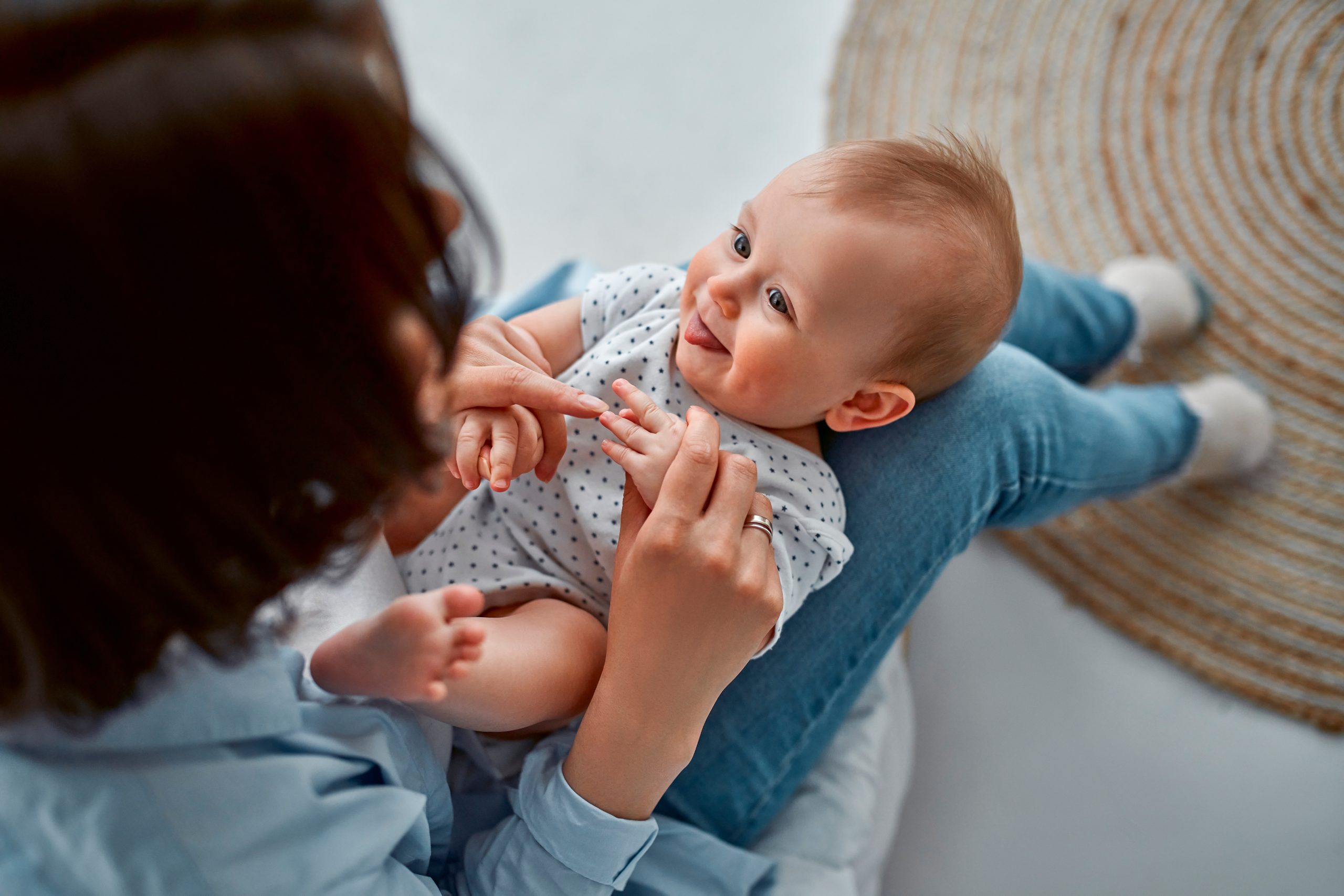
Brain development thrives on real interaction. Your baby’s brain forms millions of connections based on daily experiences. And face-to-face interactions with a loving caregiver really fire up those neural pathways! Your voice responding to her little coos, your toothy grin mirroring her gummy one, and your gentle sway-bounce-bounce move to calm her crying provide responsive interactions that screens simply can’t match.
Do this instead of screens: Narrate your day like you’re hosting your own baby podcast (“Now we’re folding laundry. Look at your teeny socks!”). Sing those silly songs you’d be embarrassed for anyone else to hear. Act out all the parts to a nursery rhyme as you send the little piggy to market. These simple interactions help build neural connections that support learning and bonding.
2. Screen time for babies can delay language skills (and more).
Your little nugget learns language best through real-world interactions, especially those back-and-forth babbles with you! A JAMA Pediatrics study found that 1-year-olds with more screen time than peers showed communication delays by ages 2–4. Even more concerning, the delays extended to fine motor skills and social development. And the more screen time, the greater the impact.
Do this instead of screens: Point to objects and name them during your day. Turn your baby’s “ba-ba-ba” into a conversation by responding, “Yes, that’s a ball!” Read books with silly voices (the goofier, the better!). These real interactions build language skills in ways no app or show can match. And they help protect against those developmental delays researchers are seeing.
3. Screens can disrupt sleep.
Just a little screen time for babies before bed can lead to restless nights. The blue light emitted from screens can interfere with melatonin production, making it harder for your baby to fall (and stay) asleep. Poor sleep can affect mood, memory, and even brain development. And, Mom, poor sleep for your baby means even less sleep for you!
Do this instead of screens: Establish a calming bedtime routine that includes dim lighting, a warm bath, gentle rocking, and reading a book. Put on soft lullabies or white noise.
4. Too much screen time reduces attention span.
Have you noticed how children’s shows switch scenes every few seconds? This fast-paced stimulation keeps little ones hooked, but it also conditions their brains to expect constant entertainment. As a result, everyday play and learning—like stacking blocks or flipping through a book—can seem less exciting in comparison. Over time, this can make it harder for your child to focus, whether it’s playing with toys now or paying attention in school later.
Do this instead of screens: Let your baby stack blocks, explore different textures, or watch bubbles float and pop. These hands-on activities engage your little one’s senses, strengthen problem-solving skills, and train her attention muscles.
5. Screens discourage babies from exploring their surroundings.
Your little one was born to explore! Your baby learns by grasping, shaking, dropping, and discovering cause and effect. But when babies spend more time passively watching screens, they miss out on the hands-on trial-and-error learning that builds coordination, balance, and problem-solving skills.
Do this instead of screens: Spread a blanket for tummy time adventures, scatter a few interesting objects just beyond reach to motivate movement, or make a simple obstacle course of pillows. These all build the physical and cognitive skills your baby needs far more effectively than any app or show.
In your opinion, why is screen time bad for babies? And what do you like to do with your baby instead?